Learning Outcomes:
After completing this lesson, students will be able to:
i. Define photorespiration and its role in plant metabolism.
ii. Describe the events involved in photorespiration and identify the key enzymes.
iii. Explain the factors that influence the rate of photorespiration.
iv. Discuss the evolutionary significance of photorespiration despite its apparent inefficiency.
Introduction:
Photorespiration is a complex metabolic process that occurs in plants, algae, and some bacteria. While often considered a wasteful side reaction of photosynthesis, photorespiration plays a critical role in maintaining plant health and nitrogen balance.
i. Definition and Overview:
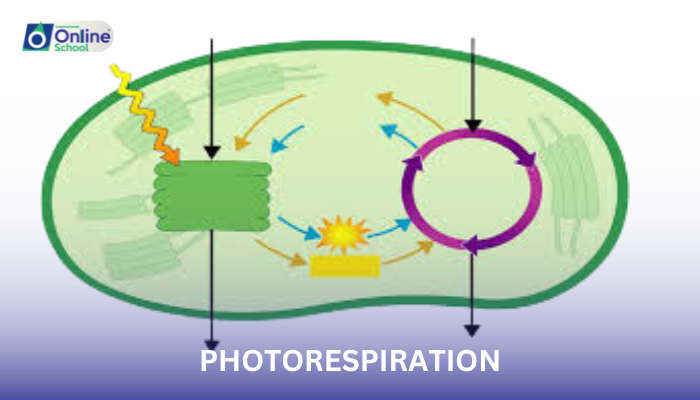
Photorespiration is a process that occurs in the chloroplast, the site of photosynthesis, under conditions of high oxygen and low carbon dioxide concentrations. It involves the fixation of oxygen instead of carbon dioxide by the enzyme Rubisco, leading to the release of carbon dioxide and the consumption of ATP and NADPH, the energy currencies generated during photosynthesis.
ii. Events of Photorespiration:
Photorespiration can be divided into three main stages:
Oxygenation reaction: Rubisco, the enzyme responsible for carbon fixation in the Calvin cycle, can also react with oxygen instead of carbon dioxide. This reaction results in the formation of a complex compound called phosphoglycolate.
Regeneration of RuBP: The phosphoglycolate molecule undergoes a series of reactions to regenerate ribulose-1,5-bisphosphate (RuBP), the initial carbon acceptor in the Calvin cycle. However, these reactions consume ATP and NADPH, molecules that are essential for carbon fixation.
Photorespiratory glycine cycle: The final stage involves the oxidation of glycine, a byproduct of the phosphoglycolate regeneration pathway. This oxidation releases carbon dioxide and generates some ATP, but not enough to compensate for the ATP and NADPH consumed in the earlier stages.
iii. Factors Influencing Photorespiration:
The rate of photorespiration is influenced by several factors, including:
Oxygen concentration: Higher oxygen levels increase the likelihood of Rubisco reacting with oxygen instead of carbon dioxide, leading to a higher rate of photorespiration.
Carbon dioxide concentration: Lower carbon dioxide concentrations reduce the competition between carbon dioxide and oxygen for Rubisco, further promoting photorespiration.
Temperature: Higher temperatures increase the enzyme activity of Rubisco, including its oxygenase activity, leading to a higher rate of photorespiration.
iv. Evolutionary Significance of Photorespiration:
Despite its apparent inefficiency, photorespiration has evolved and persisted in plants for several reasons:
Protection against photooxidative damage: Photorespiration helps to reduce the accumulation of harmful reactive oxygen species (ROS) generated during photosynthesis.
Nitrogen recycling: Photorespiration contributes to the regeneration of glycine, an amino acid used in the synthesis of chlorophyll and other nitrogen-containing compounds.
Nitrogen balance: Photorespiration provides a way for plants to release excess nitrogen, preventing the accumulation of toxic nitrogenous compounds.
Photorespiration is a complex and intriguing process that plays a crucial role in plant physiology. While it may appear wasteful, photorespiration serves essential functions in protecting plants from oxidative damage, maintaining nitrogen balance, and allowing for the recycling of carbon-fixing enzymes. Understanding photorespiration provides a deeper appreciation for the intricate metabolic processes that sustain life in plants.
